
Why the Center is Mexico's Heart
Mexico City's Historic Center is ground zero of all Mexican civilization. It was Tenochtitlán, capital of the Aztec empire. It was the seat of Spanish colonial rule. It's been a UNESCO World Heritage Site since 1987.
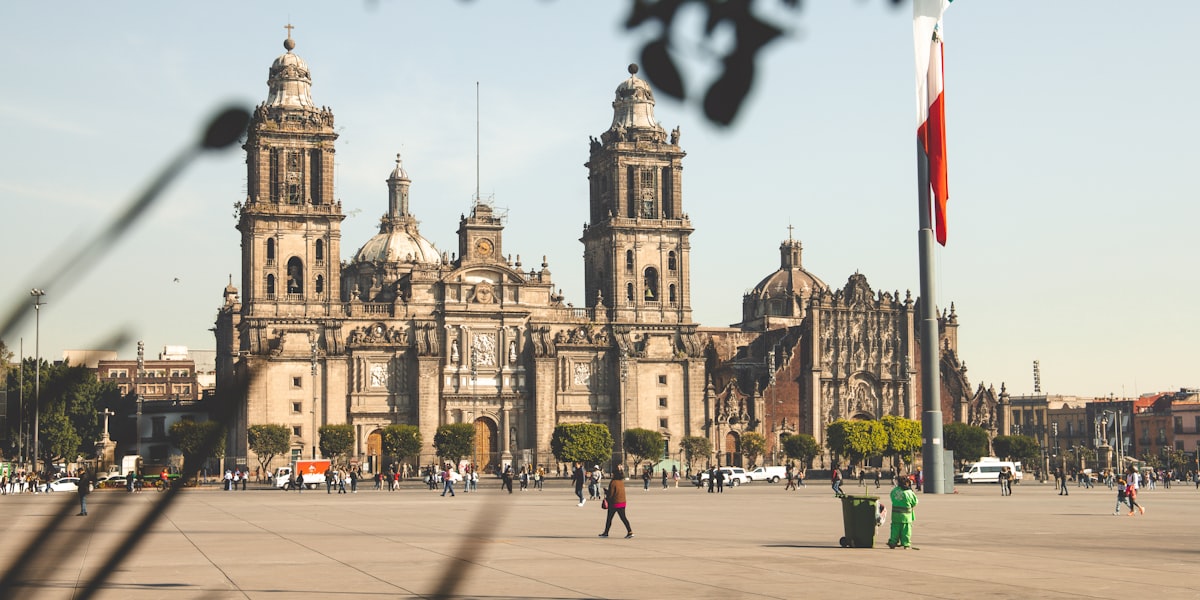
In an area of just 9 km² there coexist 1500 historic buildings spanning 700 years of history: 16th-century churches, convents, museums, colonial palaces, and Latin America's largest Metropolitan Cathedral.
The Zócalo, the main plaza, is the world's second-largest plaza after Beijing's Tiananmen. Here was the pre-Hispanic market of Tlatelolco, here Montezuma was defeated, here the revolution converged. The Center is not a museum — it's a living organism where tourists, street vendors, office workers, pilgrims, and street artists coexist.
Templo Mayor and Archaeological Zone
Templo Mayor was the religious heart of the Aztec empire. In 1978, during construction work, it was accidentally discovered. Now it's the Templo Mayor Museum, one of the world's most important archaeological sites. The site preserves pyramids, plazas, altars, and statues from 1400 years ago.
What to see: The double pyramid (dedicated to Huitzilopochtli and Tláloc), the Coyolxauhqui sculpture (moon goddess), sacred offerings with skeletons and ceramics, and the floors of Aztec streets literally beneath your feet.
Attached museum: Eight rooms with pre-Hispanic artifacts. Combined entry (site + museum) $80 MXN. Open Tuesday-Sunday 9:00 AM-5:00 PM. The guided tour ($200 MXN extra) is absolutely worth it — archaeologists tell stories not on the plaques.
Metropolitan Cathedral and Diego Rivera Murals
Metropolitan Cathedral — Latin America's largest cathedral. Built over 240 years (1573-1813). Its interior is surprising: gilded vaults, baroque altarpieces, private chapels of wealthy colonial families. The Chapel of Kings is a jewel of Mexican baroque. Free entry. Open 6:30 AM - 6:00 PM.
National Palace and Diego Rivera Murals — Right next to Templo Mayor. This was Montezuma's palace, then Cortés's seat, now the Executive Power headquarters. The neoclassical facade is imposing. The interior is partially accessible: Diego Rivera's Murals cover three entire floors. The masterworks are "Ancient Mexico," "Modern Mexico" and the "Allegory of Peace." Free entry. Hours: 10:00 AM-5:00 PM (closed Sundays except the first of the month).
Gastronomy: From Ancestral to Modern
Café de Tacuba — Iconic restaurant in the Centro since 1912. Located on Tacuba Street. Proposes "Mexican author cuisine" — sophisticated interpretations of pre-Hispanic and viceregal dishes. The mole prieto, chile relleno de requesón, rajas tamales. Main courses ~$350-450 MXN. Reservation recommended.
El Cardenal — Another CDMX classic (1968). Homemade whole-grain bread is legendary. The sopa de tortilla, Mexican comfort food executed perfectly. Best coffee in the city. Located on Avenida Palma. Dishes ~$250-350 MXN.
Street Gastronomy: The real food of the Centro is on the streets. Motolinia Street is the taco route: barbacoa tacos from 5 AM, Arab tacos (yes, Syrian heritage from the 1900s), tamales, Oaxacan tamales. Budget: $30-60 MXN per person. The Balcón del Zócalo offers views and decent food: tortas, quesadillas, nopales. Dishes ~$150-250 MXN.
Palace of Fine Arts and Alameda Central
Palace of Fine Arts — CDMX's most beautiful building. Neoclassical architecture with art nouveau touches. Built 1904-1934. Inside, the Tiffany stained glass dome is spectacular. Temporary exhibitions include Mexican and international art. Mexican Muralism has some of its finest examples here (Rivera, Siqueiros, Orozco). Entry ~$80 MXN. Open 10:00 AM-5:45 PM (closed Mondays).
Alameda Central — Latin America's oldest park (1592). Here witches were executed during the Inquisition, lovers met in secret during the 19th century, municipal bands played in the 50s. Today it's a haven of peace. Cafeterias, cotton candy vendors, guitar music. Completely free. Open 6:00 AM - 8:00 PM.
Nightlife: Plaza Garibaldi and Cantinas
Plaza Garibaldi — Epicenter of live Mexican music. Mariachi bands wait there from 5 PM, ready to play in restaurants or the plaza. Music is constant: "Cielito Lindo," "El Son de la Negra," corridos. It's chaotic, noisy, authentic and slightly-risky (the plaza is safe if you follow protocols: don't flash money, don't go alone, go with others).
Cantina La Opera — Legendary since 1876. CDMX's oldest cantina. Pancho Villa's bullet hole in the lamp is still in the ceiling. Expensive brandy, traditional botanas (cheeses, ham), atmosphere of smoke and nostalgia. Main courses ~$200-300 MXN.
La Faena — More sophisticated cantina, keeps the spirit but with better service. Quality mezcal. Luxury al pastor tacos. Atmosphere of intellectuals and artists. Dishes ~$250-350 MXN.
Getting There
Metro: Line 2 (Blue), Zócalo station. It's the most touristy stop but it's where everything is. Direct access to the Zócalo, the Cathedral, and near Templo Mayor.
Walking from other areas: From Alameda (5 minutes), from Fine Arts (10 minutes), from Templo Mayor (7 minutes).
Uber: From Polanco ~$200 MXN, from Coyoacán ~$150 MXN, from Roma ~$100 MXN.
Safety tip: The Centro is completely safe during the day. After 7 PM, use common sense: don't wander alone, avoid dark streets, go in groups. Main streets (Madero, Tacuba, Motolinia) are safe even at night.
✨ Book & Save
Recommended links to complement your trip. Booking through these links supports Marimbas Home at no extra cost.
Related guides
Complete Mexico City Travel Guide
Discover Mexico City: bohemian neighborhoods, world-class museums, prehispanic gastronomy.

San Ángel, Mexico City
Guide to San Ángel: the urban magic village with Saturday Bazaar, colonial museums, and world-class dining.

Mexico City Museums
Best museums in Mexico City: Anthropology, Chapultepec Castle, Soumaya, Frida Kahlo.