
Why Visit Templo Mayor
Templo Mayor is more than an archaeological site; it is where the heart of the greatest Mexica empire in Mesoamerica once beat. Located literally in the heart of Mexico City's historic downtown, just steps from the Zócalo and the Metropolitan Cathedral, Templo Mayor is a living testament to how the modern city was built upon the ruins of the Aztec empire.
What makes Templo Mayor unique is its geographical and historical significance. As you walk through the streets of Downtown, you are literally walking over the remains of Tenochtitlan, the Aztec capital that was once larger than any European city of its time. Templo Mayor is not simply an archaeological mound hidden on the city's periphery; it sits in the pulsing heart of the city, surrounded by skyscrapers, government offices, and the daily life of millions. This juxtaposition between the ancient Aztec imperial past and urban modernity is what makes it so impactful.
The main structure was a dual pyramid dedicated to two deities: Tlaloc (god of rain) and Huitzilopochtli (god of war and guide of the Mexica). Both gods were fundamental to Aztec cosmology. The temple was the most important religious, political, and ceremonial center of the empire. It was here that ritual sacrifices were performed, cosmic celebrations were held, and political acts reaffirmed Mexica dominance over Mesoamerica. Discovering and exploring this site is discovering the very soul of one of history's most complex and sophisticated civilizations.
History of Templo Mayor: From 1325 to 1521
The Founding of Tenochtitlan (1325): According to Mexica legend, in 1325 the god Huitzilopochtli ordered the Mexica people (who would become the Aztecs) to find a promised land where an eagle stood perched on a cactus devouring a serpent. After a hundred years of migration from Aztlán (their mythical homeland), the Mexica found this sign on an island in Lake Texcoco. They founded Tenochtitlan there, and the first temple they built was dedicated to Huitzilopochtli, which would become the Templo Mayor.
Templo Mayor was not built overnight. It was continuously expanded and rebuilt over two centuries, passing through seven different construction phases. Each phase represented an act of political or religious power. Each Aztec emperor believed it was their religious duty to expand and beautify the temple, adding layers on top of previous ones, literally creating an archaeological archive of imperial power.
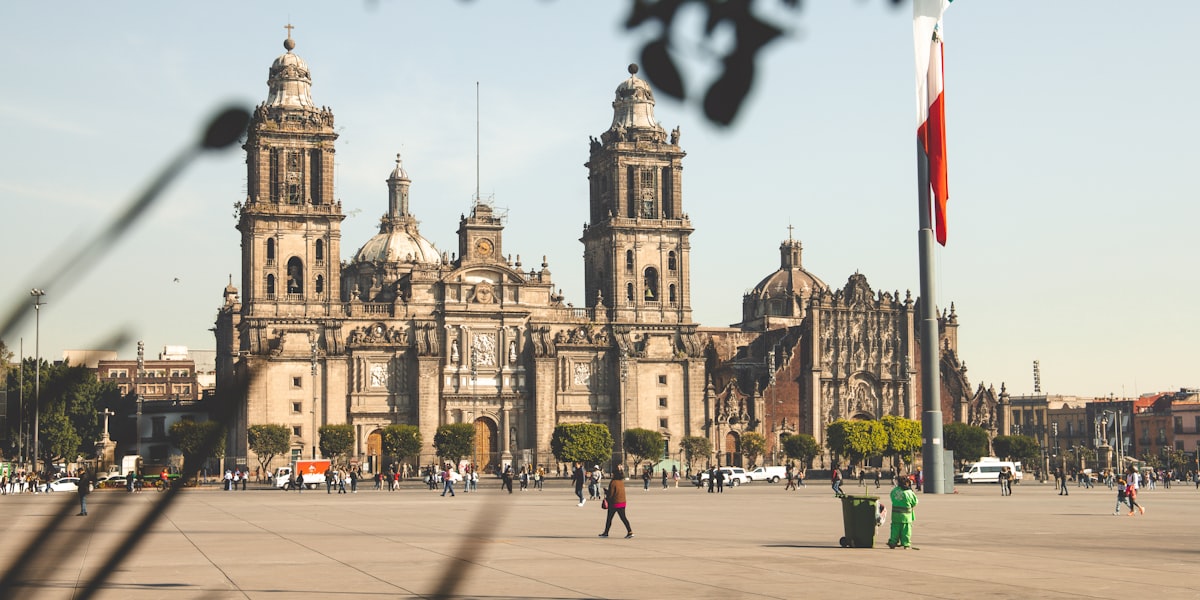
The Destruction of 1521: When Hernán Cortés arrived in Tenochtitlan in 1519, he was amazed by the grandeur of the city and its central temple. But when conflict erupted between conquistadors and Mexica, Templo Mayor became a symbol of Aztec resistance. During the Siege of Tenochtitlan in 1521, the Spanish systematically destroyed the city, and Templo Mayor was completely demolished. The Spanish used its stones to build the Metropolitan Cathedral, literally replacing the Aztec temple with a Christian one. For four centuries, Templo Mayor disappeared from public view, buried beneath the streets of the colonial and modern city.
The Coyolxauhqui Stone: The Sculpture That Changed Everything
On the night of February 21, 1978, workers from Mexico's electrical company were excavating in the Historic Center when they discovered a massive circular stone covered in Pre-Hispanic symbols and inscriptions. This 3.25-meter diameter stone would become one of the most important Aztec sculptures ever found, and would mark the beginning of Mexico's most significant urban archaeology project: the excavation and restoration of Templo Mayor.
Who Was Coyolxauhqui? According to Aztec mythology, Coyolxauhqui was the goddess of the moon, sister of Huitzilopochtli. The legend tells that when the mother of the gods, Coatlicue, became pregnant with Huitzilopochtli, her children (including Coyolxauhqui) were ashamed and decided to kill her. But Huitzilopochtli, born already as a fully armed warrior god, killed his siblings and dismembered Coyolxauhqui, throwing her body down from the summit of a sacred mountain. Templo Mayor was built precisely on the supposed location of this sacred mountain, called Coatepec.
The Coyolxauhqui stone shows exactly this: the dismembered body of the lunar goddess, with her head turned to one side (a common symbol in Aztec art indicating death), her arms and legs dislocated, and her entire body surrounded by astrological and cosmological symbols. It is a masterpiece of Pre-Hispanic sculpture that communicates in stone the foundational narrative of the Aztec empire. Seeing this stone is like seeing the myth made into petrified reality.
What to See in the Archaeological Zone: Structures and Findings
The Pyramid Bases: The first thing you'll see when entering the archaeological zone are the enormous stepped pyramid foundations remaining from Templo Mayor. Although the original pyramid was destroyed to its foundations by the Spanish, archaeologists have excavated and consolidated the successive layers of construction, allowing you to see different construction eras layered on top of each other. This is fascinating because you can literally see how the Aztecs built upon their own ruins, each generation leaving its mark.
The Temple of the Eagle Warriors (House of the Eagles): One of the best-preserved structures is the Temple of the Eagle Warriors, also known as the House of the Eagles. This temple was a sacred space where the most valiant warriors of the Aztec elite warrior class (the Eagle Warriors and Jaguar Warriors) prepared and performed rituals. The walls still have carved reliefs of warriors in the form of eagles devouring hearts, symbols of the sacrifice necessary to maintain the movement of the universe. This temple gives clear insight into military power and the importance of war in Aztec culture.
The Tzompantli (Skull Wall): One of the most chilling findings is the tzompantli, literally a "wall of skulls". The Aztecs placed the skulls of the sacrificed on wooden posts, creating a truly macabre wall. This was an act of power, a public reminder of Mexica domination. Thousands of skulls have been found at this site, providing archaeological evidence of the scale of ritual sacrifice. The skeletons were analyzed by anthropologists, and many showed signs of ritual decapitation, confirming the historical narrative about Aztec sacrifice.
Ritual Offerings: As they excavated, archaeologists discovered over 200 ritual deposits around the temple. These contained objects of incalculable value: jade figurines, gold jewelry, ceramic vessels, obsidian, statues of gods, and a surprising variety of objects brought from the most distant provinces of the empire. Each offering tells the story of a specific moment in the temple's history, perhaps an imperial coronation, a solstice, or a military victory. Seeing these objects is seeing the gifts the Aztecs made to their gods.
Templo Mayor Museum: Archaeological Treasures Under One Roof
The 8 Halls of the Museum: The Templo Mayor Museum, built adjacent to the archaeological zone, contains 8 thematic halls that tell the complete story of Tenochtitlan and Templo Mayor. Each hall is designed to transport you to a different aspect of Aztec life: from the mythical founding of the city, to religion, warfare, economy, and finally conquest.
The Coyolxauhqui Stone: The focal point of the museum is, of course, the completely restored Coyolxauhqui stone. Seeing it up close, under controlled lighting, is an overwhelming experience. The details of the sculpture are incredible: each symbol, each line, each decorative element tells a story. It is impossible to stand in front of this stone and not feel the connection to a civilization that was destroyed 500 years ago but remains alive in these carved rocks.
The Tlaltecuhtli Monolith: Another of the most important findings is the Tlaltecuhtli monolith, discovered in 2006 during subsequent excavations. This is the largest Aztec monolith ever found, and represents Tlaltecuhtli, the earth goddess who devours the dead. The sculpture measures approximately 4.25 meters wide and weighs several tons. What is surprising is that Spanish texts never mentioned this monolith, which means it was covered during the conquest or built in a late phase of the temple. Its discovery revolutionized understanding of the final construction phases of Templo Mayor.
The Offerings and Artifacts: The museum's display cases are filled with thousands of artifacts: jade figurines of gods and animals, decorated ceramic vessels, obsidian tools (the volcanic glass that the Aztecs worked with surgical precision), stone masks, gold statuettes, and hundreds of objects brought from the most distant provinces of the empire. One outstanding object is a complete jaguar skeleton, suggesting that live jaguars were kept in a kind of imperial zoo in Tenochtitlan. There are also marine shell objects from the coast (several months' travel from the capital), evidence of the reach of Aztec trade and power.
Tenochtitlan Under Your Feet: The City Upon the City
The Paradox of Modernity: One of the most fascinating aspects of Templo Mayor is its location. While you're at the archaeological site, you are literally surrounded by modern 20+ story buildings. You can see office windows, hear the noise of the streets, feel the frenetic pulse of contemporary Mexico City. But beneath your feet, under the concrete, is Tenochtitlan. This juxtaposition is powerful: it reminds you that everything that Mexico City is was built upon the body of a previous civilization.
What Else Is Being Discovered? Excavations at Templo Mayor have not ended. In fact, new chambers, structures, and offerings are continuously being discovered. In 2015, archaeologists discovered a tunnel under Templo Mayor that led to a sealed chamber, possibly the tomb of an emperor. In 2017, a temple dedicated to Ehecatl (god of wind) was discovered directly under the Metropolitan Cathedral, reinforcing the narrative of how the Spanish literally built their church on top of the Aztec temple. Today, archaeological work continues under adjacent streets, and archaeologists estimate that only a small fraction of what Tenochtitlan was has been explored.
The Dimensions of Tenochtitlan: To put it in perspective, Tenochtitlan at its height (around 1500) had an estimated population of 200,000 to 400,000 people. The city was connected by canals (hence the nickname "Venice of Mesoamerica"), with enormous markets, residential neighborhoods, temples, palaces, and a sophisticated system of drinking water and drainage. The city occupied an area of approximately 13.5 square kilometers. For comparison, London in 1500 had around 50,000 people. Tenochtitlan was an ancient megapolis, and its ruins remain an unresolved archaeological mystery.
Getting There and Hours: Practical Information
Location: Templo Mayor is located at Seminario #8, in the Historic Center of Mexico City, practically next to the Zócalo (the main plaza). The exact address is: Seminario 8, Centro, 06060 Mexico City.
How to Get There by Metro: The easiest way to get there is on Mexico City's Metro. Take Line 2 (Blue Line) and get off at Zócalo station. From there, it's just a 5-minute walk north to Seminario Street. If you prefer, you can also use Line 1 (Pink Line) at Zócalo station. Both stations are connected to the Zócalo underground, making access direct and safe.
Archaeological Zone Hours: Templo Mayor is open Tuesday to Sunday from 9:00 AM to 5:00 PM. It is closed Mondays. Museum hours are 9:00 AM to 4:30 PM (closes 30 minutes before the archaeological zone to allow staff to complete cleaning). It is recommended to arrive at least 2-3 hours before closing if you want to explore both the archaeological zone and museum without rushing.
Entrance Fees: The cost of entry to Templo Mayor (archaeological zone + museum) is $80 MXN for Mexican adults, and $85 MXN for foreigners (as of this guide, prices may have increased). Children under 12 enter free. Students and teachers with credentials receive a discount. There are also discounts for seniors (65+).
Free Entry: Every Sunday, entry to Templo Mayor is free for Mexican citizens residing in the country. For foreigners, there is no free entry on Sundays. Sundays tend to be very crowded, so if you want to avoid crowds, it is better to go during the week.
Practical Tips: Recommended Route and Length of Visit
Combine Templo Mayor with nearby attractions: Templo Mayor is not an isolated attraction; it is in the heart of the Historic Center, surrounded by equally impressive attractions. The ideal route is to start at the Zócalo itself, which is at the foot of Templo Mayor. The Zócalo itself is one of the largest public spaces in the world (240m x 240m), and it is thrilling simply to be there. From the Zócalo, you can see the Metropolitan Cathedral, the National Palace (where Diego Rivera's mural is), and the Supreme Court of Justice.
The Recommended Route (Full Half-Day):
1. Start Early: Arrive at Templo Mayor around 9:00 AM when it opens. Crowds are usually smaller in the early morning.
2. Archaeological Zone First: Spend 45 minutes to 1 hour in the archaeological zone. Make sure to see the Coyolxauhqui Stone (there is a replica in the archaeological zone and the original is in the museum), the Temple of the Eagle Warriors, and the main foundations.
3. Museum: Dedicate 1 to 1.5 hours to the museum. Don't try to see everything in 30 minutes; archaeology deserves more time. Slowly read the plaques, observe the artifacts, and allow the history to unfold.
4. Lunch: There are cafeterias in the area, but the food is expensive and not exceptional. Better to cross to the Zócalo and eat at nearby restaurants.
5. Cathedral and Zócalo: After lunch, visit the Metropolitan Cathedral (free entry). This cathedral was built between 1573 and 1813 using stones from Templo Mayor. It is fascinating to see how the Christian temple was literally built on top of the Aztec temple.
6. National Palace: If you have energy, the National Palace is just two blocks away. You can enter free to see Diego Rivera's murals, which tell the complete history of Mexico from Pre-Hispanic times through the revolution.
Total Duration of Visit: If you only visit Templo Mayor, dedicate at least 2.5 to 3 hours (1 hour in the archaeological zone, 1.5 in the museum, 30 minutes transition). If combined with Cathedral and Zócalo, you're looking at a full half-day (3-4 hours). If you add the National Palace, you can easily spend the entire day in the area.
Guided Tours: There are guides certified by INAH (National Institute of Anthropology and History) available within Templo Mayor. A guided tour generally costs $300-500 MXN per person (small groups) and lasts 1-1.5 hours. Guides can provide historical and archaeological context that greatly enriches the experience. For large groups, discounts are available.
Final Tips: Wear comfortable shoes; the archaeological zone has much uneven terrain. Bring water, especially in summer; the Historic Center can be very hot. If you have specific interest in archaeology, consider buying the official museum guide at the site store ($250-350 MXN); it has excellent photographs and detailed explanations. Avoid weekends if possible; the place fills with tourists. Finally, if you have mobility issues, be aware that the archaeological zone has steps and uneven terrain, although an alternative route with easier access is available if you request it at the entrance.
✨ Book & Save
Recommended links to complement your trip. Booking through these links supports Marimbas Home at no extra cost.
Related guides
Complete Mexico City Travel Guide
Discover Mexico City: bohemian neighborhoods, world-class museums, prehispanic gastronomy.

Mexico City Museums
Best museums in Mexico City: Anthropology, Chapultepec Castle, Soumaya, Frida Kahlo.

National Museum of Anthropology: Mexico's Cultural Jewel
Complete guide to Mexico